
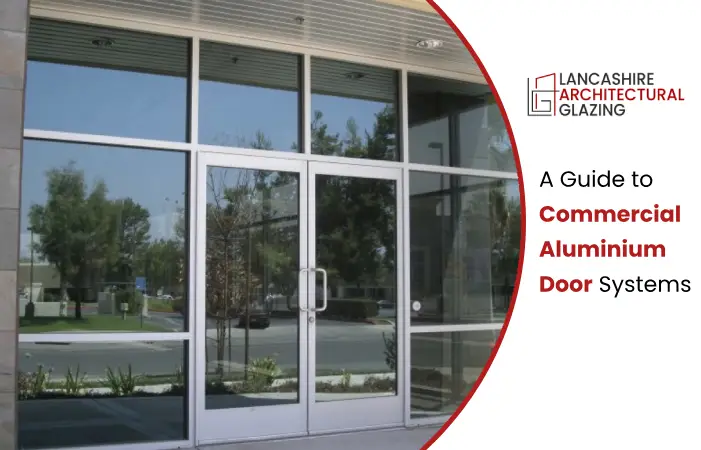
In modern building projects, commercial aluminium doors are highly demanded due to their flexibility for building types. Aluminium-based door systems are chosen depending on their structural needs, access control, and compliance standards, since they are used in retail premises and industrial units.
This blog defines the key types of commercial aluminium doors, their structure, types, and common uses in this situation.
Overview of Aluminium Framed Door Systems
These frames can be utilized in extensive commercial applications since they are consistently and precisely dimensioned. Depending on the building accessibility, the framing system can be designed either as hinged, sliding, or folding.
Aluminium framed doors are normally coated with powder coating or anodizing. These finishes offer even surface treatment and come in a variety of colours and textures. Frame depth, sightlines, and the thickness of glazing differ according to structural and regulatory requirements.
Commercial Glass Entrance Door Configurations
Primary access to the buildings that face the world is often a commercial glass entrance door. Such systems are typically framed by aluminium with toughened or laminated glass panels. The choice of the glass specifications depends on the building regulations and safety norms.
Office buildings, shopping centres, and hospitality venues often have commercial glass entrance doors.
Commercial Sliding Doors in Commercial Settings
Commercial sliding doors work using track-based systems where door panels move horizontally. Such systems are applied to areas with a short swing clearance or areas where there are continuous access openings. The rollers, tracks, and locking mechanisms used in the sliding panels are supported by aluminium profiles.
Showrooms, medical centers, and transportation centers are the typical locations where commercial sliding doors are required.
Commercial Bifold Doors and Folding Systems
Commercial bifold doors are several connected doors that fold and stack on either side or on both sides of an opening. These systems require strict alignment and structural support for smooth operation. Commercial bifold doors are typically fitted in areas that need wide access openings, but permanent structural barriers are not desired. Depending on architectural requirements, panel configurations, stacking options, and track layouts are different.
Fire Compliance and Commercial Fire Rated Doors
Commercial fire rated doors are built to the fire resistance rating as required in building regulations. All these factors combine to inhibit fire and smoke propagation over a given time.
Commercial fire-rated doors are typically fitted in stairwells, corridors, plant rooms, and compartmentation areas in commercial buildings.
Structural Design and Installation Considerations
Commercial aluminium doors are specified by evaluating load requirements, frequency of use, and compliance with the regulations. Wind load, thermal movement, and acoustic performance are the factors that affect the design of the frame and the choice of materials.
The system of installation packages encompasses site survey, frame positioning, glazing installation, and hardware installation. There is a tendency for commercial projects to be coordinated with other walls of the building, e.g, curtain walling, shopfront system, and access control infrastructure.
Integration with Modern Building Standards
Commercial aluminium door systems are made to be compatible with the existing building technologies. These are the ability to be compatible with automated operators, security systems, and energy-efficient glazing options. The door assemblies should comply with local building codes, fire regulations, and accessibility standards.
Inspection and maintenance schedules are also specified for commercial door systems to ensure consistency in performance.
Commercial aluminium doors are actually very diverse, including commercial sliding doors, commercial bifold doors, commercial glass entrance doors, aluminium framed doors, and commercial fire rated doors. Understanding the distinctions between these door types will help you give the appropriate requirements and successfully integrate them into commercial construction projects.
Comments are closed