
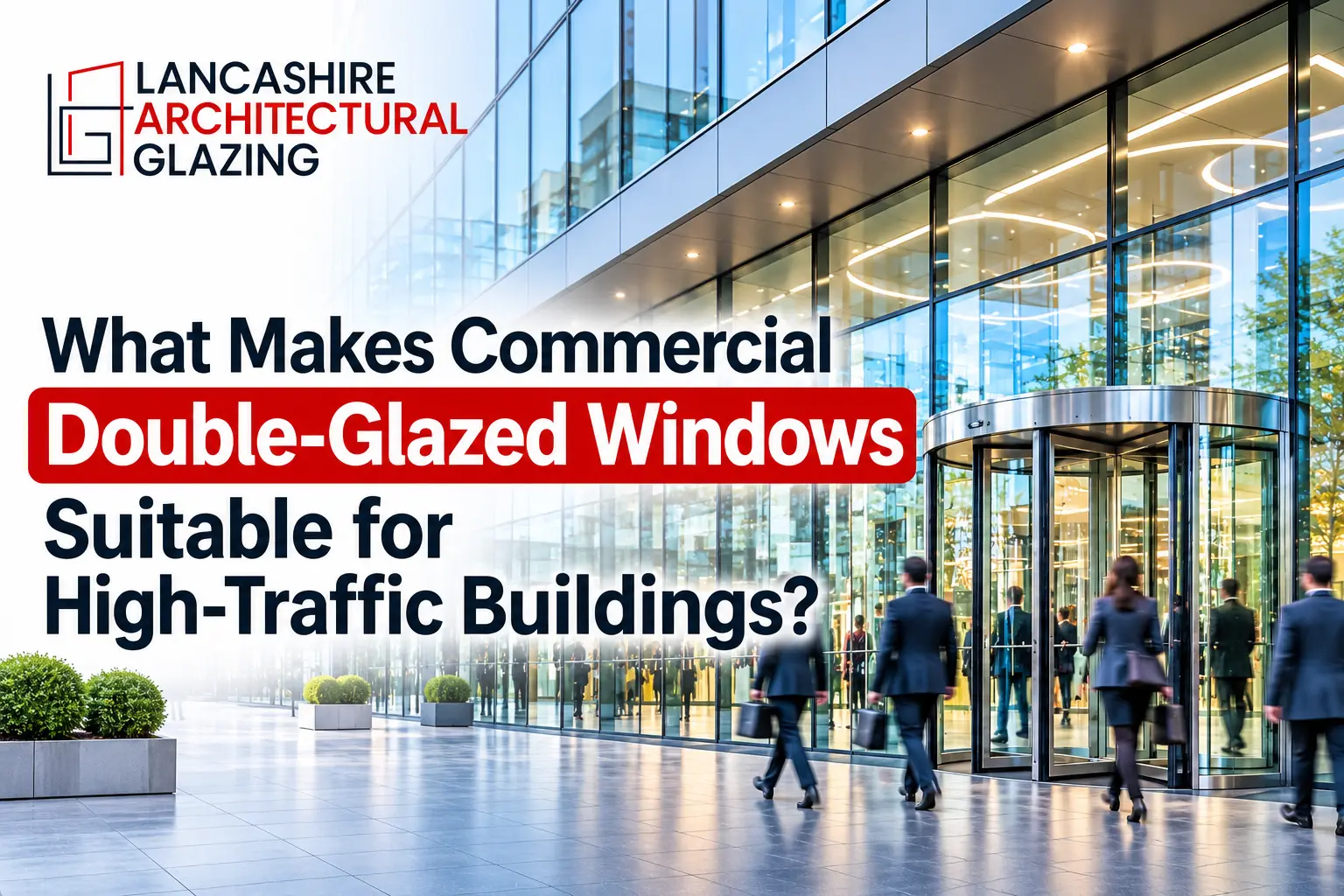
Commercial buildings accommodate a large number of people for several hours each day. In a hospital, patients need a quiet and comfortable environment, whilst in a shopping center, the glazing must be suitable for a busy public area. Offices and educational institutions have different requirements, particularly concerning indoor temperatures, lightning, and external noise. The increasing use of commercial double glazed windows reflect these practical requirements. Many older commercial properties were originally fitted with single glazed aluminium windows, which may no longer provide the level of thermal insulation needed for their current use.
Why Glazing Safety Matters In High Footfall Areas?
Windows in public buildings are more likely to come into accidental contact with people, particularly when installed close to entrances, staircases, and pedestrian routes. For example, glazing in shopping centres may be exposed to accidental impact from shopping trolleys and mobility equipment. The glass fitted within aluminium double glazed windows can be toughened or laminated to meet appropriate safety requirements. Toughened glass breaks into relatively small fragments, while laminated glass helps retain broken pieces. Having two panes of glass does not automatically make a window safer; the glass specification itself is important.
Managing Heating Costs In Frequently Occupied Buildings
Commercial premises generally have longer operating hours than residential properties. Some healthcare facilities operate around the clock, while offices and retail outlets require heating for much of the working day during winter. Heat escaping through poorly insulated windows can contribute to higher running costs. Older single glazed aluminium windows have limited insulating properties, where the frames lack thermal breaks. Modern aluminium double glazing reduces heat transfer through the use of two glass panes.
Maintaining Suitable Noise Levels Indoors
External noise is a particular concern for buildings located near main roads, railway lines, and busy commercial areas. Teachers may struggle to make themselves heard in classrooms, while background noise can interfere with conversations in medical consultation rooms and meeting spaces. The performance of commercial double glazed windows depend on factors such as glass thickness, cavity width, and the quality of seals. Replacing single glazed aluminium windows with specified aluminium double glazed windows can help create quieter conditions without requiring extensive alterations to the building’s interior.
Accommodating Large Glazed Areas In Commercial Properties
Retail showrooms, office receptions, and public buildings often feature large windows to provide natural daylight and improve visibility. Supporting these larger sections of glass requires frames capable of carrying the weight of the glazing without compromising structural stability. The strength of aluminium allows manufacturers to produce relatively thin window profiles. This makes aluminium double glazing suitable for many commercial buildings where wide glazed areas are required. However, the size and thickness of each glass panel must be kept in mind.
Maintenance Disruption In Occupied Buildings
Window repairs in a commercial property can interfere with normal operations. Although some single glazed aluminium windows remain structurally sound for decades, their seals, handles, and opening mechanisms can deteriorate. Modern commercial double glazed windows should be selected with future servicing in mind.
Meeting the Requirements of Different Commercial Buildings
There is no single glazing specification suitable for every commercial property. A hospital may require greater acoustic insulation, whilst a shopping center may place more importance on impact resistance and visibility. Educational buildings may also need suitable opening restrictors and ventilation arrangements.
When specifying aluminium double glazing, building owners must consider energy performance requirements alongside safety and the intended use of the premises. The suitability of aluminium double glazed windows ultimately depend on how closely their specifications match the daily demands of the building.
Frequently Asked Questions
1. What is the difference between commercial double glazed windows and residential double glazed windows?
Commercial double glazed windows are often designed for larger openings, greater structural loads and more demanding safety and performance requirements.
2. Are aluminium double glazed windows energy efficient?
Yes, aluminium double glazed windows with thermally broken frames and low-emissivity glass can reduce heat loss and improve building insulation.
3. How long does aluminium double glazing last?
Aluminium double glazing can typically last 20–35 years or longer, depending on installation quality, sealed unit performance and regular maintenance.
4. Can single glazed aluminium windows be converted to double glazing?
Some single glazed aluminium windows can accommodate double glazed units, provided the existing frames can support the additional glass thickness and weight.
5. Do commercial double glazed windows need to comply with UK Building Regulations?
Yes, commercial double glazed windows must comply with applicable building regulations covering energy performance, glazing safety and ventilation, depending on the building and installation.
Comments are closed