
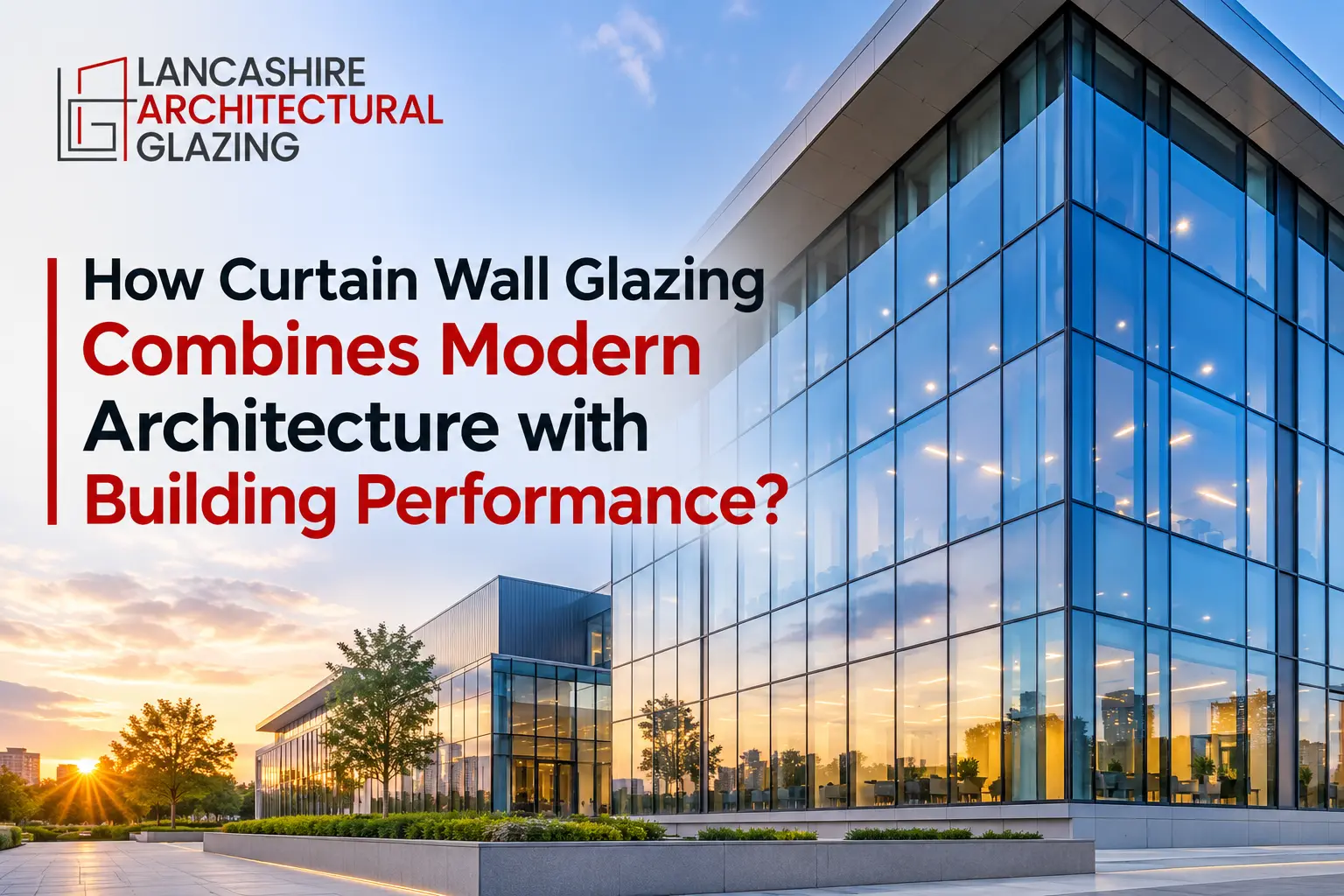
Modern commercial buildings are designed to create a balanced appeal, functionality and long-term performance. Today’s commercial buildings are becoming increasingly optimised, as people are trying to find a balance between aesthetics, functionality and long-term performance. As a result, glass facades are utilised not only to enhance the exterior appearance of buildings but also to utilise natural light more effectively.
Curtain wall glazing is one of the most successful methods that have proved their effectiveness in achieving such balance. It is a unique solution because it creates the entire external facade of a building using glass panels set within a structural frame made of aluminium. Unlike traditional exterior walls, this type of facade does not bear the structure’s load. However, it is attached to the main building and is meant to withstand environmental effects while being visually appealing.
How Curtain Wall Glazing Improves the Design of Modern Buildings?
- Creating an Attractive and Contemporary Exterior: There are many reasons why architects favour glazed exteriors, but one of them is that such glazing helps buildings achieve a modern look. Using large glass panels makes the exterior look sleek and smooth, which adds an appealing look to the building. Apart from traditional walls, which have little room for experimenting with their design, glass curtain walling offers various designs with panels of different sizes, colours, and frame arrangements. Such design is especially applicable to office buildings, hotels, shopping centres, and commercial buildings since in all these cases the facade plays a major role in the image of the building.
- Maximizing Natural Light in Commercial Buildings: Proper lighting is a key element in today’s modern building designs. In many commercial buildings, artificial light is required, as there may not be much window space available in the building. With large glazed curtain walling panels, this problem can be solved, as they would bring more natural light into the building. A well-designed curtain wall system is capable of distributing natural light in offices, corridors, and other communal areas of the building. In such a way, natural illumination of the interiors will be achieved. Selecting the right glass is also an important factor because clear, tinted and solar control glasses have different transparency and sunlight management characteristics. Glass for curtain walls has to be chosen in order to achieve a good combination of natural illumination, absence of glare and interior comfort.
Understanding The Role Of Aluminium In Curtain Wall Systems
The frame plays a part in the system of a curtain wall and serves the role of providing support for the glass panels and transferring the load to the main structure of the building. Aluminium is commonly used in such systems because it is relatively lightweight and it has good stability and design capabilities. The actual design of aluminium curtain walling can include numerous types of frames of different sizes and finishes to meet the demands of the specific project. The ability of aluminium to be moulded plays a major role in its convenience for the construction of large commercial buildings because the making of consistent frames and different exterior designs becomes possible. The corrosion resistance property of aluminium is another good feature. If maintained properly, the aluminium curtain wall can serve its purpose for a long time.
Important Factors to Consider Before Installing Curtain Wall Glazing
- The Selection of Appropriate Materials of Glass and Frames: This is an important step since not all the materials may suit the project and will help one achieve the right look and performance. Glass is available in different varieties, and it depends on the type of material that you select. The same applies to the aluminium curtain walling; it depends on the type of glass panels and the structural load that will be transferred from the panels. It also depends on the building where the glazing will be installed.
- Structural Considerations: All buildings have different structural considerations, and this needs to be assessed before any glazing is done. Things like the building’s height, wind load, weight of glass and fixing arrangement affect the whole glazing design. The aluminium curtain wall needs to be engineered to cater to the glass panels installed.
- Ensuring Professional Installation and Maintenance: Even high-quality curtain wall glazing materials may not deliver the expected results without proper installation. Accurate measurements, secure connections, correctly fitted seals and suitable drainage arrangements are essential for the overall performance of the facade. Regular maintenance is equally important. Glass panels should be cleaned regularly, while aluminium frames, joints and seals should be inspected for signs of damage or wear. These checks help maintain the appearance and functionality of glass curtain walling over time.
Conclusion: Today’s glazed facades do not simply make commercial buildings look beautiful, they incorporate architectural flexibility, lighting, thermal and weather protection into one facade. The pairing of the right glass panels and aluminium framework makes curtain wall glazing an excellent choice for today’s commercial architecture.
With the incorporation of structural considerations, appropriate material selection and installation, building owners can ensure that their glazing solutions help improve the performance of their buildings. This is whether one chooses to use aluminium curtain walling for its flexible design or looks at different types of glass curtain walling.
FAQs:
1. What Are The Benefits Of Glass Curtain Walling?
Glass curtain walling improves natural lighting, enhances building aesthetics and offers greater architectural flexibility.
2. Where Is A Curtain Wall System Commonly Used?
A curtain wall system is commonly used in offices, hotels, shopping centres and other commercial buildings.
3. Why Is Aluminium Curtain Walling Popular In Modern Buildings?
Aluminium curtain walling is popular because it is lightweight, durable, corrosion-resistant and easy to customise.
4. What Is An Aluminium Curtain Wall Made Of?
An aluminium curtain wall generally consists of aluminium framing profiles, glass panels, seals and fixing components.
Comments are closed